I was eighteen the summer of 2010, walking out of a TNT stand with a Big Deluxe assortment under my arm. Two hundred bucks at the time. Looked like the biggest box on the shelf, the step down from the Big Bang. I carried it to the car like it was something. Set it on the kitchen counter when I got home and looked at it for a week. The 4th was coming, and I was going to be the guy doing the show.
Show night. I lit the smallest fountain first. Worked my way up. Saved the headliners for last the way logic said to. By the time the box was empty I was standing in the driveway holding cardboard and watching the smoke clear, and the whole thing was over before any of it had really started. Most of what came out of that “biggest box on the shelf” was one-tube filler. The “big” items were small. Two hundred dollars had bought me about thirty bucks of actual show and a hundred and seventy bucks of marketing.
Different last names. Every July.
That same Big Deluxe assortment now sits on California stands at $319.99. Pre-COVID it ran around a hundred and fifty. That's roughly a hundred percent climb against about forty percent inflation in the same span. The tubes didn't get longer. Effects didn't get more elaborate. Cardboard didn't switch to gold leaf. Somebody's margin got bigger. I've watched that exact scene play out on California driveways every July since I started keeping notes, neighbors I knew, families I didn't, people who walked into a stand wanting to do something nice for their kids and walked out three hundred dollars lighter without ever realizing they'd been outplayed. Not because the parents are bad shoppers. Because the brands count on the parents not knowing what they're looking at. The whole assortment business model depends on that information gap.
They lose it to bad information.
/ Who's Talking
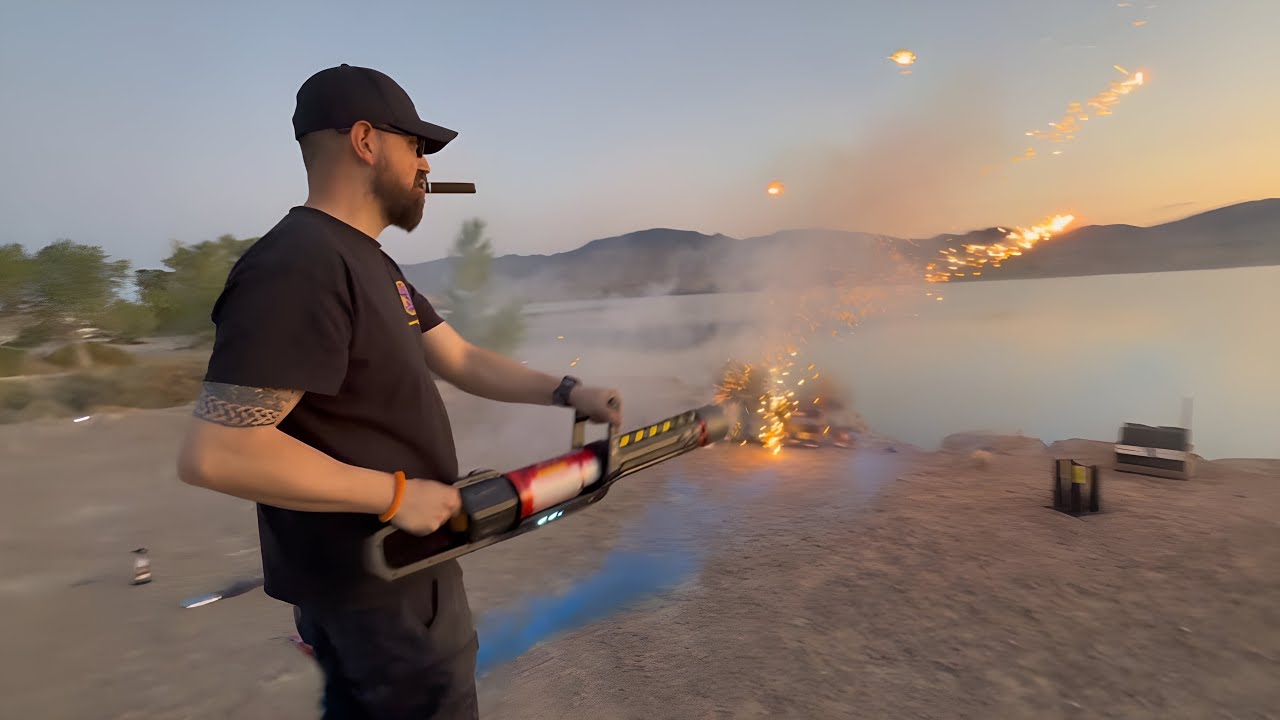
My name is Joseph. Most people know me as Beastlol on YouTube. I've been lighting fountains in my driveway since I was a kid, family ritual. I started writing down which ones actually delivered after the show I just told you about, sixteen years ago, because I was tired of getting outplayed and tired of watching neighbors blow $300 on assortments that fizzled before the kids could put down their hot dogs.
Five hundred fountains later, that one driveway has become a kind of laboratory. Every July it smells like charcoal and gunpowder and chlorinated pool water. By 8 PM the whole block knows the show's about to start. I light the items. Write down the verdicts. Stack the receipts. Then I put it all on YouTube for free, where the channel has been running since 2014.
No paid rankings. No corporate marketing dollars buying placements in the Bible. If a fountain is garbage, I tell you. If it rips, I tell you that too. The day a brand pays me for a positive review is the day this whole thing stops being worth reading, and everyone who's been watching the channel knows it. That's the contract.
One more thing before the receipts, the part nobody in a Safe & Sane state ever gets told. Every effect you've ever seen in an aerial show is built from the same chemical compounds sitting in legal fountains right now. The crackle, the willow, the strobe, the fish, the chrysanthemum, same chemistry, ground level, at eye height where your kids can actually watch it. What you give up is the boom. I won't lie about that; I've lit thousands of dollars of professional-grade product in Nevada where it's legal, and my caveman brain still loves a salute you can feel in your chest. But here's the confession nobody makes: after enough of it, even that gets boring. The show was never about what you smuggle. It's about what you know.
And knowing sounds like this: next July 4th a show fires up three houses down, a triple cascading whistle climbs over the block, and you grin, because you know somebody just lit $120-plus of Allegiance. Only two fountains on the market still make that sound, and one of them is a rewrap selling for less. You'll read tube layouts the way the rest of the block reads box art. You'll pace a show instead of dumping one. You'll learn it was never all about the crackle. Fountains are an acquired taste, and acquired means learned.
What follows are four receipts I want every California family to see before they walk into a stand on June 28. None of them require you to buy anything from me. Read them. Save your $300. Go enjoy your July 4th.
In 2017, the Phantom Awestruck assortment retailed at $129.99. By 2020 it had climbed to $159.99, about right for inflation over those three years. By 2024 it was around $200. Still roughly tracking the Bureau of Labor Statistics CPI numbers. Then in 2025 it jumped to $289.99. That's a 45 percent single-year leap against a 3 percent CPI rate.
End to end: +123% in eight years, against roughly 32% cumulative inflation in the same span. The assortment hasn't gotten 3.8 times better. The tubes haven't gotten longer. The effects haven't gotten more elaborate. The cardboard didn't switch to gold leaf.
That gap between actual cost growth and inflation-justified cost growth has a name. Isn't tariffs. Isn't shipping. It's pure greed. Phantom Awestruck is the textbook case study, the receipt I'd hand any California family the second they tell me their July 4th budget.
Inside the Bible: every Phantom assortment audited year over year, with BLS-verified inflation deltas and the items inside each box that don't justify the climb. Page 83 has the dedicated Awestruck deep dive; page 84 has the full unfair-pricing audit table.
Walk into a TNT stand in 2025 and you'll see a fountain called Atomic Salsa for $79.99. Walk to the next aisle and you'll see another TNT fountain, same shape, same tube count, same effects sequence, under a different name. For $30 less.
It's the exact same fountain. Same factory. Same components. Different label. The "rewrap", that's the term inside the industry, costs you a thirty-dollar tax for the privilege of buying the version with the prettier box art. The cheaper version performs identically. I've demoed them side by side in the driveway. Same spread. Same height. Same crackle. Same finish.
This isn't isolated. Dozens of items on California stands this year are rewraps of cheaper originals. Some are TNT-rewrapping-TNT. Some are TNT under the Freedom/DFS label at lower prices. There are other patterns I won't name here, the lawyers would not love it, but anyone who's spent a few seasons walking the aisles starts to notice the same fountain shapes appearing under different brand names at very different prices.
Knowing which is which is the difference between a $300 cart and a $180 cart with the same show.
Inside the Bible: the full rewrap encyclopedia. Every documented duplicate. Every cheaper original named. Brand-by-brand cross-reference. This is the section that pays for the Bible by itself the first time you bring it to a stand.
Walk past it. Thank me later.
The Phantom Storm Runner has been a BOGO staple on California stands, typically $49.99, buy one get one free. Sounds great. There's just one problem.
It comes in two batches. One delivers a giant crackle that genuinely beats Living the Dream. Tested it in the driveway. Took notes. The thing rips. The other is a watered-down dud. Same box. Same name. Same BOGO price. Same shelf. Half the performance.
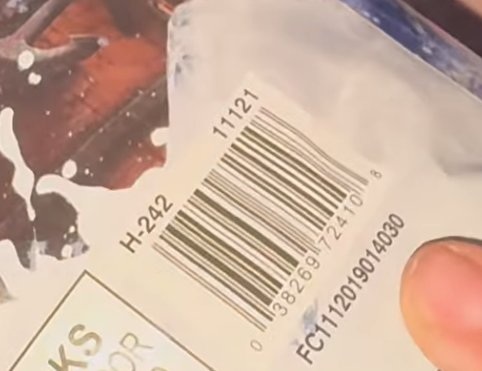
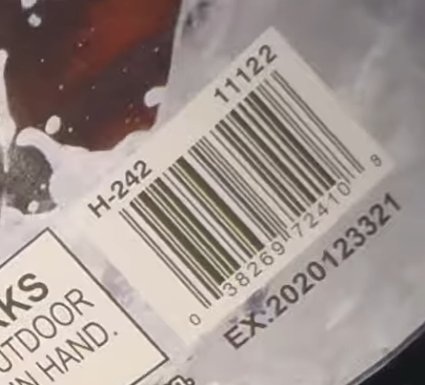
Both barcodes are real. Prefix codes redacted, the diagnostic detail belongs to Bible buyers.
If you grab the wrong one, you've spent your finale budget on a fountain that finishes weak. If you grab the right one, you've got one of the best per-dollar items at any California stand this season.
The barcode tells you which is which. Every Storm Runner box has it. Good batch and bad batch use different prefix codes, visible right there on the box. No app required. No insider connection needed. Three seconds at the stand and you know whether to buy or walk away.
Not going to publish the exact prefix codes here. That's the section that protects the Bible buyers, they paid, they get the answer. But the existence of the two-batch problem is real, the barcode tell is real, and photos of both batches sit on page 93.
Inside the Bible: the exact good-batch prefix, the exact bad-batch prefix, photos of both barcodes side by side, and the methodology I used to figure it out. The whole barcode hack on one page.
Don't want to pay? Fair enough. I break the barcode trick down for free on the YouTube channel too, go watch it, the tell is all there. The Bible just puts the exact prefixes, both batch photos, and the method on one page so you're not scrubbing through videos while you're standing at the stand. Watch on YouTube →
Forget the assortments for a second. Forget the cardboard footprints and the box art and the marketing names. Here's what sixteen years of driveway testing has taught me:
Two of the right singles, fused together, will out-perform any $200 assortment on any California stand. Not by a little. By a wide margin. I run this comparison at every block party I'm invited to. I let people watch the assortment demo first. Then I light the paired finale. The reaction is consistent every time. "Wait, that's it? That was $36?"
The recipe involves two specific fountains, a particular fuse type, and a fusing technique that takes about four minutes to learn. Total spend: roughly $36 at most stands. Sometimes less when one of them is on BOGO. Total runtime: longer than most $200 assortments. Total impact: not even close.
This is the single most-requested section in the whole Bible. Not because the items are exotic, they're sitting at every California stand. Because nobody tells you the combination. The brands sure don't. They make more money selling you the $200 assortment.
Inside the Bible: the exact two items by name, the exact fuse type and brand, the step-by-step paired fusing technique with diagrams, and the angle/elevation tweak that turns it from "good" into "the neighbors are at the edge of their lawn now."
/ Why It Has To Be Now
California Safe & Sane is one of the strangest legal markets in the country. Per state Health & Safety Code §12599, fireworks stands open at noon on June 28 and close at noon on July 6. That's a nine-day window. Possession outside the window is a gray zone in most cities. Use outside the window is straight-up prohibited even on legally-purchased product.
Inside that nine-day window, the inventory rotates fast. The best pallets, the limited-run discontinuations, the BOGO blowouts, the items priced at giveaway because the manufacturer is dumping last year's stock, sell out in roughly the first 48 hours. If you walk into a stand on July 2nd looking for the items I rank as 10/10, you're going to see empty shelves where they used to be.
The family with the right shopping list on June 28 spends less and gets a better show than the family with twice the budget on July 1st. Information beats budget every single year. That's the whole game.
The 2026 Fireworks Bible exists for exactly this reason. One hundred and seventy pages of tested rankings, batch warnings, rewrap pairings, budget-tier shopping lists, and the show-construction techniques that take a $36 spend and turn it into a finale that has the kids asking "can we do it again?"
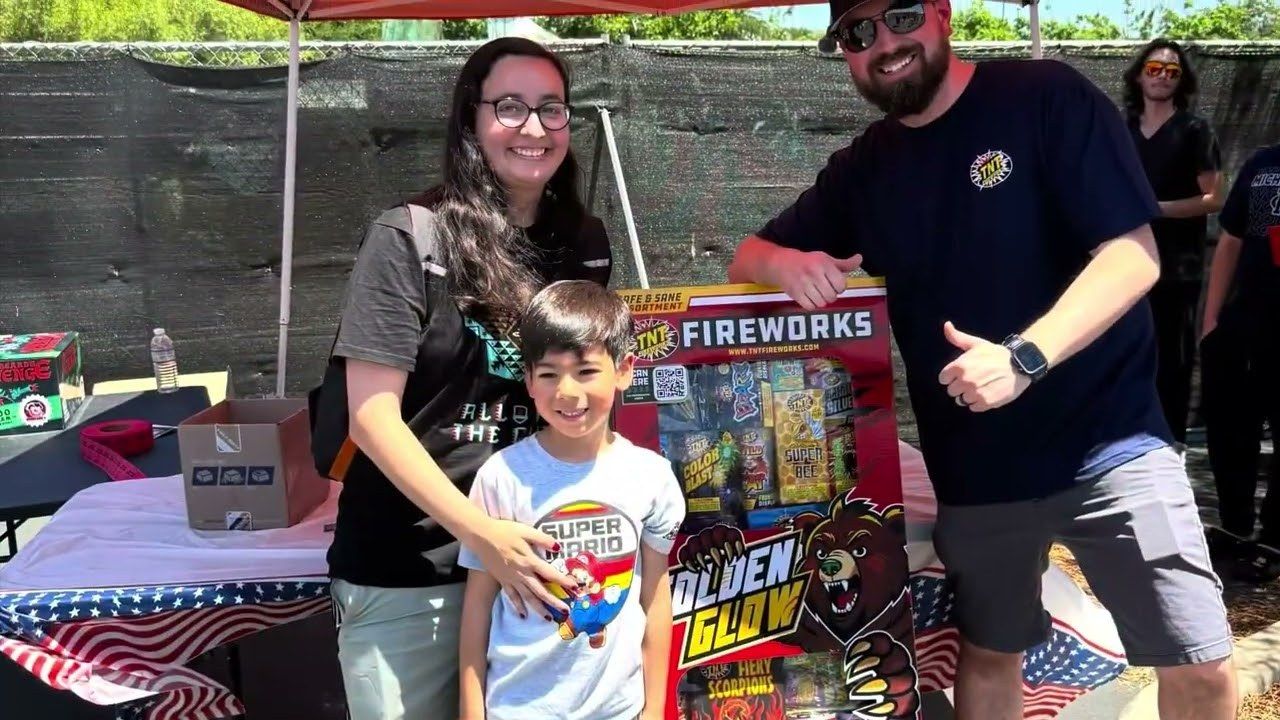
The Bible isn't theoretical. The work shows up in real California driveways every July. This is one of them.
/ What's Inside the 2026 Fireworks Bible
The Bible is a living document. It updates monthly all season as new batches hit shelves and new pricing data comes in. You buy it once at the Master Pyro tier; you keep getting the updates as long as you stay subscribed.